Empires as historical systems
Empires are more than colored areas on a map. They are military systems, tax structures, trade networks, legal orders and cultural contact zones. Their influence cannot be measured by square kilometers alone, but area, peak period and administrative centers make comparison easier.
Largest empires by approximate maximum area
Comparison table
| Empire | Max. area | Peak | Core center | Main historical effect |
|---|---|---|---|---|
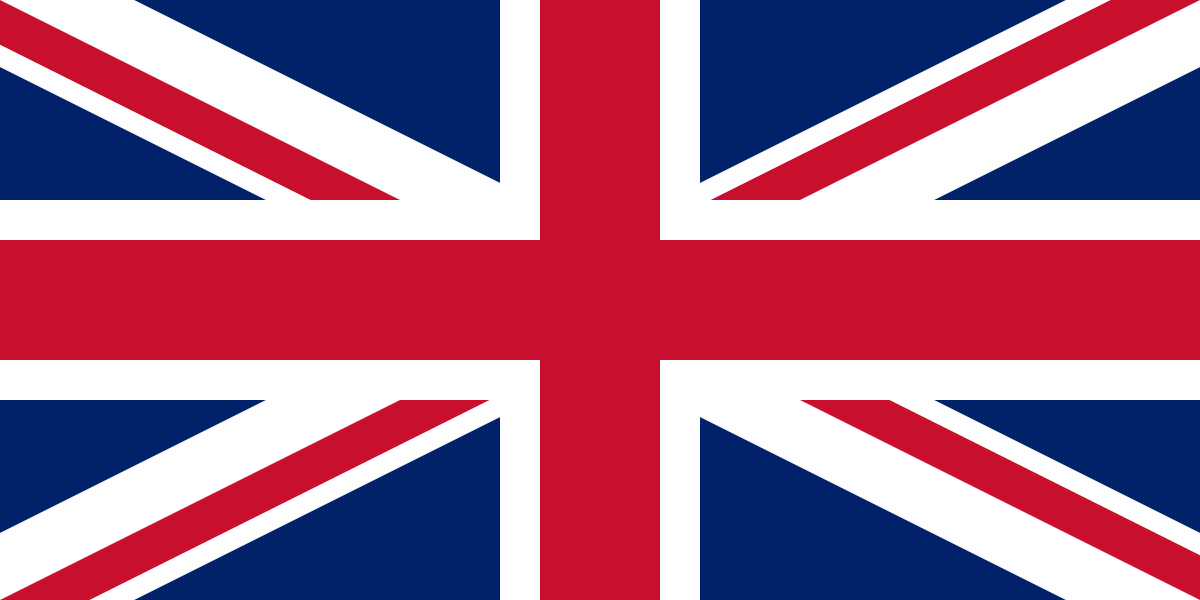 British Empire British Empire | 35.5 million km2 | 1920 | London | Largest empire by total land area; naval power, trade routes and colonial administration. |
 Mongol Empire Mongol Empire | 23-24 million km2 | c. 1279 | Karakorum / Khanbaliq | Largest contiguous land empire; connected Eurasian trade, warfare and diplomacy. |
 Russian Empire Russian Empire | 22.8 million km2 | 1895 | St. Petersburg | Continental expansion across Eurasia, Siberia and at times Alaska. |
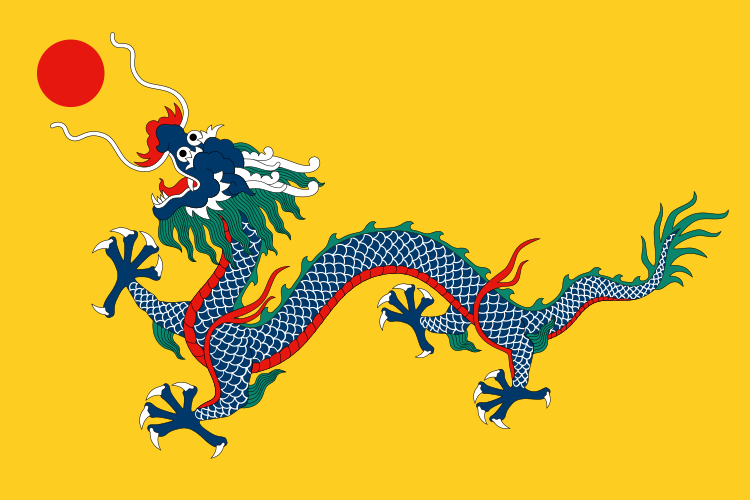 Qing dynasty Qing dynasty | 14.7 million km2 | c. 1790 | Beijing | Largest territorial reach of late imperial China. |
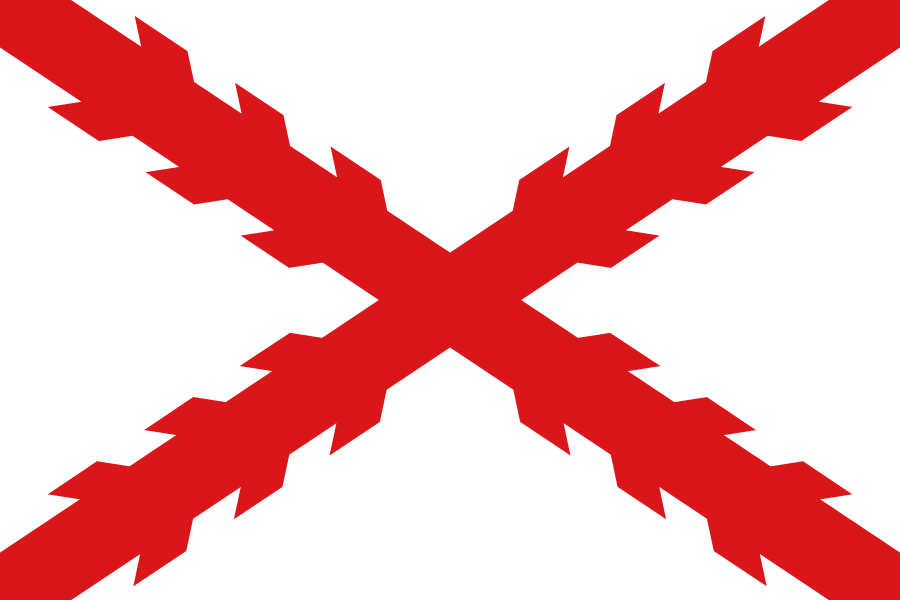 Spanish Empire Spanish Empire | 13.7 million km2 | 18th century | Madrid | American colonies, silver flows and transoceanic imperial routes. |
 French Empire French Empire | 11.5 million km2 | 1920s | Paris | Colonial power in Africa, Asia, the Americas and Oceania; Napoleonic legal influence. |
 Umayyad Caliphate Umayyad Caliphate | 11.1 million km2 | 750 | Damascus | Early Islamic expansion from Iberia to Central Asia. |
 Abbasid Caliphate Abbasid Caliphate | 11.1 million km2 | 8th-9th c. | Baghdad | Imperial and intellectual culture with Baghdad as a major knowledge hub. |
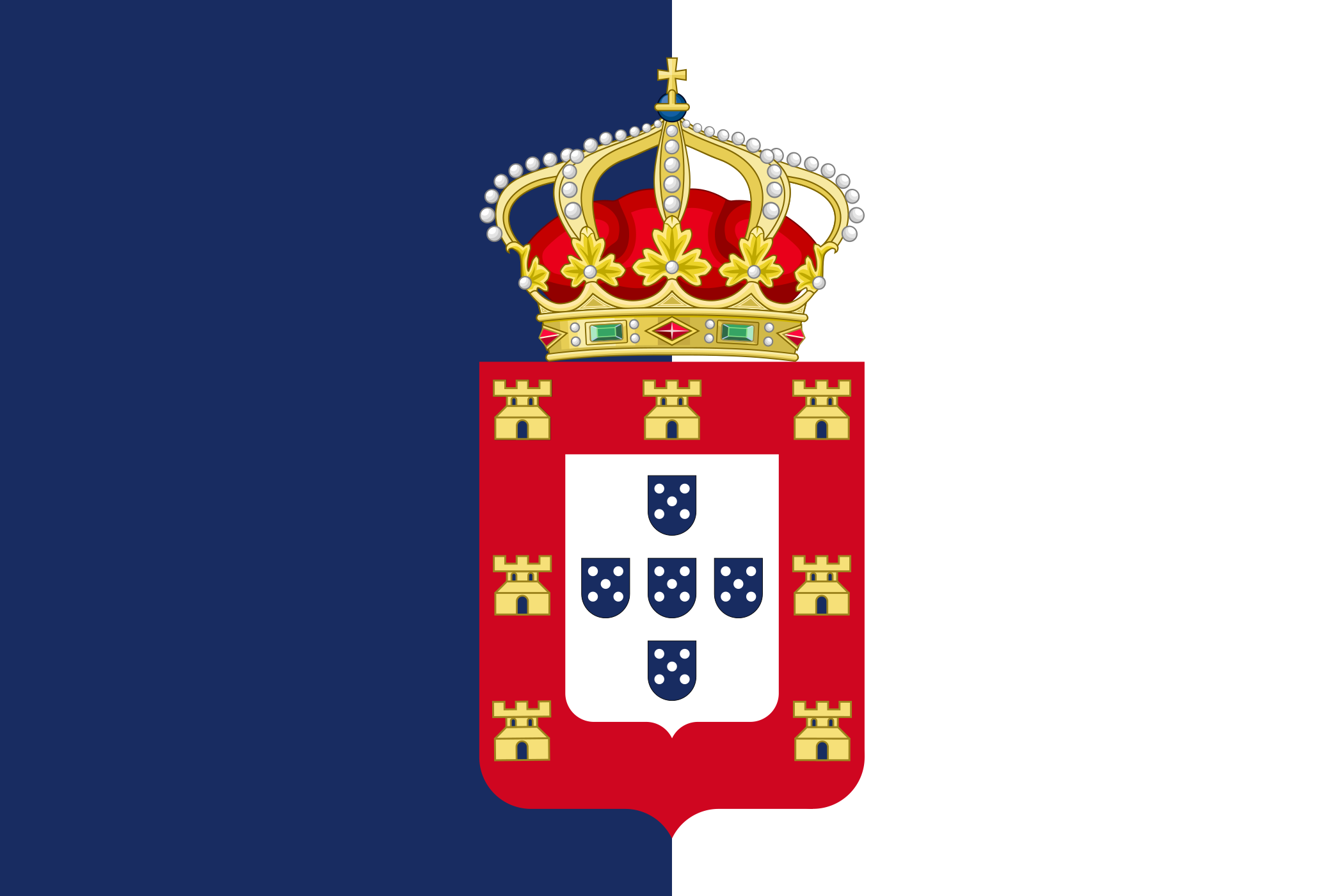 Portuguese Empire Portuguese Empire | 10.4 million km2 | early 19th c. | Lisbon / Rio de Janeiro | Maritime outposts, Brazil, Africa and routes to India and East Asia. |
 Achaemenid Empire Achaemenid Empire | 5.5 million km2 | 500 BCE | Persepolis / Susa | Early large empire with royal roads, satrapies and imperial administration. |
 Ottoman Empire Ottoman Empire | 5.2 million km2 | 1683 | Istanbul | Multi-continental empire linking Europe, Asia and Africa. |
 Macedonian Empire Macedonian Empire | 5.2 million km2 | 323 BCE | Pella / Babylon | Alexander campaigns and the spread of Hellenistic culture. |
 Roman Empire Roman Empire | 5.0 million km2 | 117 | Rome | Mediterranean empire with law, infrastructure, urbanization and military logistics. |
 Maurya Empire Maurya Empire | 5.0 million km2 | c. 250 BCE | Pataliputra | First great empire over much of the Indian subcontinent; Ashoka's edicts. |
 Mughal Empire Mughal Empire | 4.0 million km2 | c. 1700 | Agra / Delhi / Lahore | Indo-Persian court culture, administration, architecture and South Asian economic power. |
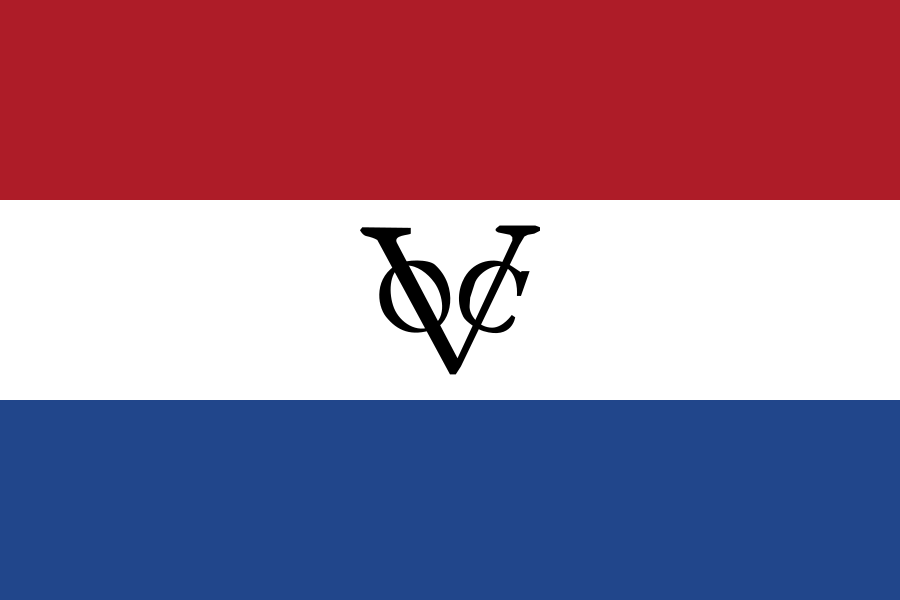 Dutch colonial empire Dutch colonial empire | 3.7 million km2 | early 20th c. | Amsterdam / Batavia | Commercial empire shaped by the VOC, Indonesia, the Cape, the Caribbean and Suriname. |
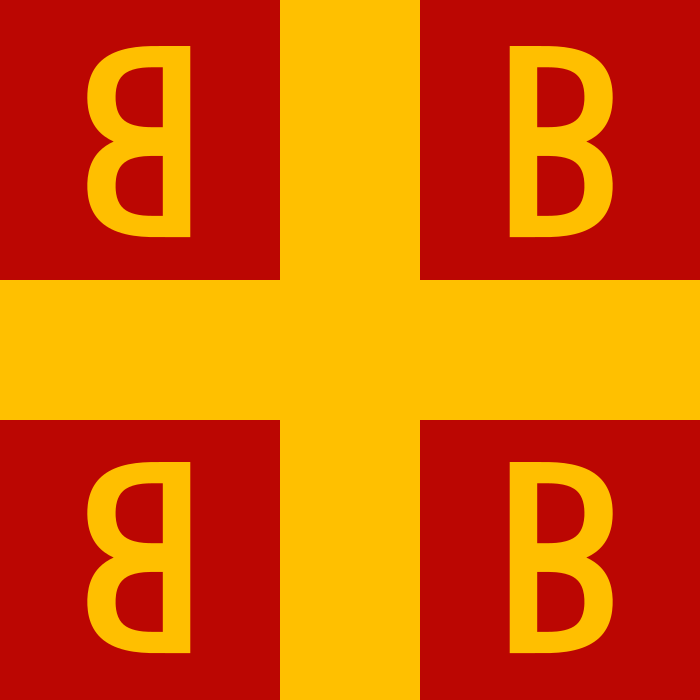 Byzantine Empire Byzantine Empire | 3.5 million km2 | 555 | Constantinople | Eastern Roman continuity, Orthodox culture, law and diplomacy. |
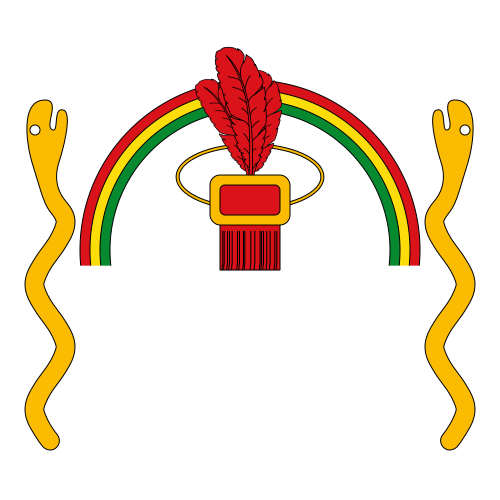 Inca Empire Inca Empire | 2.0 million km2 | c. 1530 | Cusco | Largest pre-Columbian South American empire; roads, terraces and khipu administration. |
 Mali Empire Mali Empire | 1.1 million km2 | 14th c. | Niani / Timbuktu | West African gold, trade and scholarly power in the Sahel. |
 Aztec Empire Aztec Empire | 0.22 million km2 | 1519 | Tenochtitlan | Central Mexican Triple Alliance with tribute, city building and ritual rule. |
Why empire maps are never exact
Historical borders were often zones rather than clean lines. Some areas were directly administered, others paid tribute, accepted military pressure or were only claimed on maps. A serious comparison treats area values as approximate.
What empires left behind
Imperial legacies are ambivalent. Roman law, Persian administration, Ottoman governance, Mongol trade routes, Mughal architecture, Inca roads, West African scholarly networks and British maritime systems shaped later societies. At the same time empires often relied on war, coercion, extraction and unequal rule.
Sources and method
- Britannica: largest empires
- Guinness World Records: largest contiguous empire
- Humanity Tracker methodology
Related topics
FAQ
Which was the largest empire in history?
By total area the British Empire is usually treated as the largest. The Mongol Empire was the largest contiguous land empire.
Why do area values differ?
Sources use different definitions of claim, tribute, direct administration and military control.
Are empires only negative?
No. They connected infrastructure, trade and knowledge, but they also often involved violence, extraction and coercion.